
How to Build AI Basketball Video Analysis Coaches Can Trust
Trustworthy basketball video AI must show its evidence, reveal uncertainty, preserve coach authority and recover safely when analysis is weak.
By Michael Ragland, Founder of CourtLab
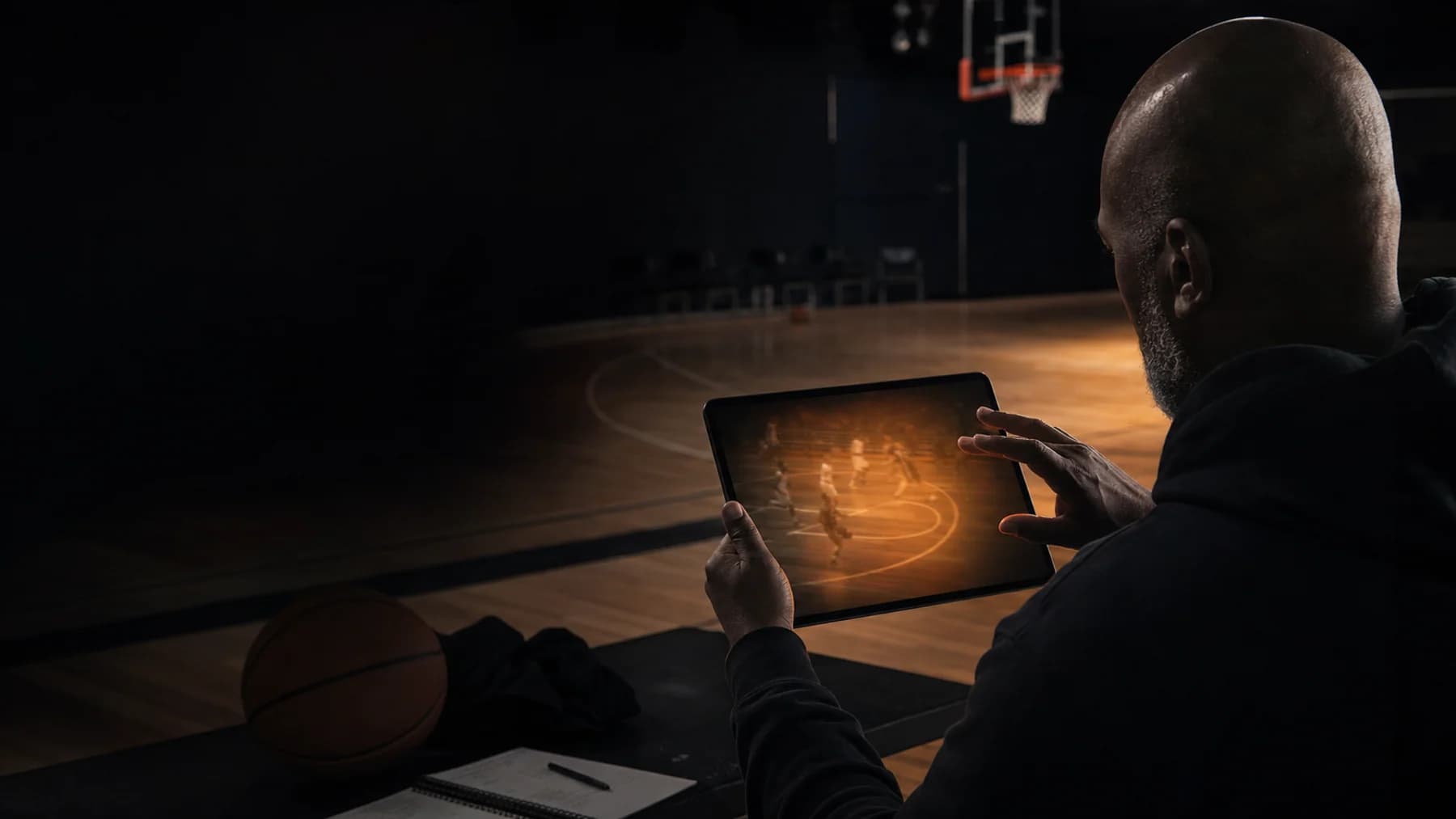
CourtLab treats inspectable evidence, visible uncertainty and coach authority as product requirements for basketball video AI.
How to Build AI Basketball Video Analysis Coaches Can Trust
Basketball video analysis can now produce clips, labels and observations faster than a coach can review an entire game. Speed is useful. It is not the same as trust.
A result can look convincing in a dataset and still look wrong when a coach watches the sequence. The camera may miss the relevant player. A crowded possession may create ambiguity. A detected moment may be technically correct but useless for the coaching question.
For CourtLab, that leads to a simple product principle: a confident wrong answer is worse than an honest “not sure.”
Trustworthy AI basketball video analysis must do more than detect. It must help a coach inspect the evidence, understand uncertainty, keep authority in the right hands and recover safely when the analysis is weak.
Trust is a workflow, not a model score
Technical performance matters, but coaches do not experience a benchmark. They experience a product making a suggestion about a real athlete in a real game.
That experience creates different questions:
- Can I see the moment that supports this result?
- Does the surrounding sequence change the interpretation?
- Is the system certain, uncertain or unable to tell?
- Can I correct or dismiss the result quickly?
- Who can see the analysis?
- Does the system treat my judgment as authoritative?
If the product cannot answer those questions, a high-confidence label can make the experience less trustworthy, not more.
Four requirements for coach-trusted basketball AI
1. Inspectable evidence
Every meaningful observation should connect to the relevant video moment. A coach needs to move from summary to evidence without searching through an entire game.
The clip should include enough context to judge the moment, not only the shortest possible detection window. What happened immediately before and after can determine whether an observation is useful.
The product should also make the source clear. A generated statement with no visible path back to evidence asks the coach to trust the software’s confidence. An inspectable statement allows the coach to use professional judgment.
2. Visible uncertainty
Many products hide uncertainty because certainty looks more impressive. In coaching, that can be dangerous.
Uncertainty should affect the experience. Weak results may be demoted, grouped for review or labelled as needing a closer look. In some cases the right output is no output.
“Not sure” is not a failure of the interface. It is evidence that the product understands the limit of its current information.
This matters especially in youth sport, where camera quality, angles, lighting, uniforms and crowded play vary widely. A system designed only for ideal footage can perform confidence when operating conditions become messy.
3. Clear authority boundaries
AI can help organise evidence. It should not quietly become the final authority on a young athlete’s development.
Coaches need control over which moments matter, how observations are framed and whether the analysis becomes part of a development conversation. Athletes and families need appropriate privacy. Clubs need role-based access that reflects responsibility rather than curiosity.
The underlying video may be the same, but a family member, athlete, coach and supporter should not automatically receive the same view or authority.
Trust therefore includes access design. A useful analysis shown to the wrong person, for the wrong purpose, is not a trustworthy product outcome.
4. Fast correction and safe recovery
When the system is wrong, the coach should not need to become a data annotator.
A practical correction loop might let a coach mark a moment as useful, not useful or the wrong moment in seconds. The goal is to preserve coach authority and identify repeatable failure patterns without creating another administrative burden.
The system also needs a recovery path. If the analysis cannot be completed or the footage is unsuitable, the product should preserve the video, explain what happened and allow the coach to continue the review manually. A failed AI process should not make the underlying coaching workflow fail.
What CourtLab changed after visual review
During CourtLab Film Room review, some moments that appeared convincing from the analysis did not look convincing when the actual sequence was inspected.
The correct response was not to write a more confident explanation. It was to make the product less confident.
We strengthened trust gates, made uncertainty more visible and demoted results that the available evidence could not support. We continue to treat coach judgment as authoritative.
That work does not prove universal accuracy, and CourtLab does not claim that it does. It demonstrates the operating standard we believe sports AI must meet: show the evidence, expose the limit and fail in a way that protects the coaching workflow.
How clubs and coaches should evaluate video AI
Before adopting an AI basketball video product, ask to see how it behaves when conditions are imperfect.
- Can a coach inspect the source video for every important observation?
- Does the product show uncertainty or only confident outputs?
- What happens when the camera angle or footage quality is poor?
- Can a coach correct a result quickly?
- Does a correction improve the workflow without creating unpaid data-labelling work?
- Are athlete, family, coach and supporter permissions separated?
- Can the film workflow continue when AI analysis is unavailable?
- Which claims are measured, and under what operating conditions?
These questions move the conversation from an AI demonstration to an operational coaching tool.
The next proof is repeated use
The strongest evidence will not be a polished detection demo. It will be coaches returning to the workflow because it helps them find, inspect and discuss meaningful moments without adding unnecessary administration.
CourtLab is working toward a narrow paid pilot with a club or development program. The goal is to test the Film Room and PlayerGraph through a real development cycle, observe where trust breaks and measure whether the workflow becomes important enough to keep using.
If you coach basketball or operate a development program, we would value your input: where must AI say “not sure” before you would trust it with athlete development evidence?
About the author
Michael Ragland
Founder of CourtLab
Michael Ragland is the founder of CourtLab, building trusted basketball development records, film intelligence and grassroots sports analytics infrastructure for athletes, families, coaches and clubs.
Author profileSources and further reading
CourtLab is inviting coaches and development programs to test where basketball video AI earns trust, where it should say “not sure” and what a paid repeat-use pilot must prove.
Learn more about CourtLab